
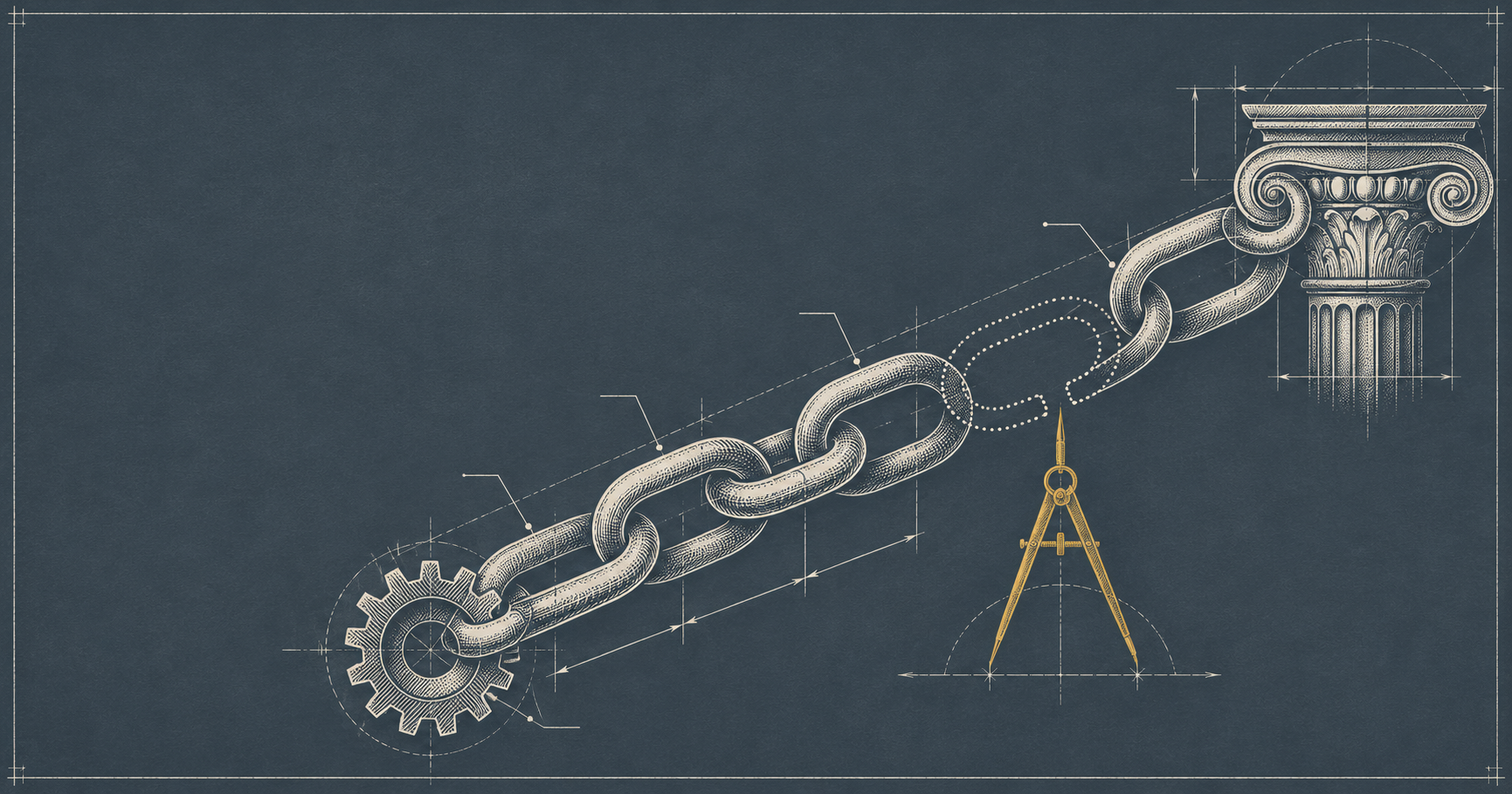
Founders usually assume that if the company paid for something, the company owns it. That assumption can survive for years. A freelance developer builds the first version of the software, a designer creates the logo, a photographer shoots the product catalog, and employees improve all of it. Everyone behaves as though the company owns the result, until an investor, acquirer, or opposing attorney asks a simple question: where is the assignment? That is usually the moment the problem becomes expensive.
I spend a meaningful part of my practice reviewing chain of title for companies preparing to raise money or be acquired, and the gap almost never comes from bad faith. It comes from the fact that copyright, patent rights, trade secrets, and employee inventions do not follow the same ownership rules, and paying someone to create something does not, by itself, answer who owns it. These problems are far easier to fix while the people who created the assets are still around and still friendly.
This article is educational rather than legal advice. Ownership depends on the kind of intellectual property, the relationship between the parties, the contracts they signed, state law, and the circumstances in which the work was created.
Paying a Contractor Does Not Transfer the Copyright
The contractor relationship produces the biggest surprise. A company hires a developer, designer, photographer, or videographer, the work is delivered, the invoice is paid, and the founder assumes the deliverables belong to the company. But possession of a file and ownership of the copyright in it are different things. Copyright belongs initially to the author, and under Section 204 of the Copyright Act a transfer of copyright is not valid unless it is in writing and signed by the owner. A company can hold every file a contractor ever delivered and still discover that no document ever moved the copyright.
I see this most often with creative work for e-commerce and consumer brands in Los Angeles. The product photography, the launch video, the packaging illustrations, and the website copy are frequently the most visible assets the company has, and they are frequently the ones created by freelancers under an email agreement and a deposit. When that brand is later licensed or sold, the buyer’s counsel will ask who owns the images, and “we paid for them” is not the answer they are looking for.
Work Made for Hire Is Narrower Than Founders Think
“Work for hire” may be the most misunderstood phrase in startup intellectual property. For an employee working within the scope of employment, the employer is treated as the author, and that rule does much of the work founders expect. For an independent contractor, it does far less. Under Section 101, a commissioned work qualifies as a work made for hire only if the parties agree in a signed writing and the work falls into one of nine statutory categories: contributions to collective works, parts of audiovisual works, translations, compilations, instructional texts, tests, test answers, atlases, and supplementary works. Software, logos, and product photography are not on that list.
Writing “work made for hire” into a contractor agreement therefore does not convert every line of contracted code into a work the company authored. That is why the agreements I draft never rely on the doctrine alone. They state that the work is made for hire to the extent the statute allows, and then they contain a present assignment of all intellectual property in the deliverables regardless. The distinction feels technical while everyone is getting along. It stops feeling technical when a former contractor claims ownership of a core asset.
Employees, Patents, and the Difference Between “Agrees to Assign” and “Hereby Assigns”
Employee-created copyright gives the employer a better starting point, but “within the scope of employment” still has edges: what the employee was hired to do, when and where the work was created, and what resources were used all matter. Patent rights are a separate problem entirely, because patent ownership does not follow the copyright work-for-hire rule at all. An invention belongs to the inventor until it is assigned, and Section 261 of the Patent Act requires that assignment to be in writing. That is why technology companies use invention assignment agreements rather than assuming employment settles the question.
The words in that agreement matter more than most founders realize. In Stanford v. Roche, the Supreme Court let Stanford lose its claim to patents on an HIV test kit because its researcher had signed a Stanford agreement saying he “agree[d] to assign” future inventions and later signed a third-party agreement saying he “do[es] hereby assign” them. The second phrasing was a present transfer; the first was only a promise. The third party won. I read every assignment clause for that distinction, because an agreement that merely obligates someone to sign a future assignment is worth very little once that person has left the company and stopped returning calls.
California Limits What an Employer Can Take
For California companies, there is a statutory ceiling on invention assignments. Labor Code Section 2870 provides that an assignment clause cannot reach an invention the employee developed entirely on personal time, without company equipment, facilities, or trade secrets, unless the invention relates to the employer’s business or anticipated research, or resulted from work performed for the employer. Picture an engineer at a robotics company who builds an unrelated gardening tool on weekends with personal equipment. That is a different ownership question from the same engineer developing a robotics control system at home that tracks the employer’s research. Section 2872 adds a notice requirement: any agreement containing an assignment clause must tell the employee in writing that it does not apply to inventions that qualify for the exclusion.
The takeaway is not that employee invention assignments are ineffective in California. They remain essential. It is that they must be drafted to the statute, with the Section 2872 notice attached, or the company has handed a departing engineer an argument it did not need to give.
Founders Are Often the First Missing Link
Contractors are not always where the chain breaks. Often, it is the founders. Someone writes the first code, files a provisional application, registers a domain, or develops the core technology before the company exists. The entity is then formed, operations move into it, and everyone assumes the intellectual property came along. Legally, it may not have. A patent application owned personally by a founder does not become the company’s because the founder later becomes its CEO; it becomes the company’s when a written assignment says so. When I review a chain of title, I want to trace each important asset from the person who created it to the company now relying on it, and the pre-incorporation period is where that trail most often goes cold.
Trade Secrets and AI Add Two More Layers
Assignments are only part of the picture for confidential know-how. A trade secret depends on reasonable measures to keep it secret, so agreements with employees and contractors have to do two jobs: transfer ownership and establish confidentiality. In California, where non-competes are unenforceable, those confidentiality obligations are the only thing standing between a departing engineer and a competitor, a point I covered in Trade Secret or Patent? How to Decide Before You File. Ownership paperwork and secrecy practices have to support each other.
Generative AI adds the newest wrinkle. Suppose a contractor uses an AI tool to create part of a deliverable. The company may hold an airtight assignment, but an assignment cannot transfer rights the assignor never had. As I explained in Can AI-Generated Work Be Copyrighted?, purely AI-generated expression is not copyrightable, and on the patent side, as I discussed in Who Owns an Invention Created with AI?, inventorship still requires a natural person. Companies using contractors and AI-assisted workflows need to know not only who created each asset but what protectable rights exist in it.
Fix the Chain Before Someone Else Audits It
The uncomfortable time to discover a broken chain of title is during diligence. An acquirer expects the company to own the technology it is selling; a venture investor wants assurance that a former developer cannot later claim a piece of the product; a licensing partner wants to know the company can actually grant what it is offering. When the documents are incomplete, the deal often waits while the company tracks down former contributors for confirmatory assignments. Sometimes that works. I would rather not make a financing depend on it.
When I review early-stage ownership, I care less about the thickness of the contract folder than about whether I can trace each core asset from creation to the company: who created it, what their relationship was at the time, what agreement governed the work, whether the rights were actually transferred in the present tense, and whether any statute limits the transfer. That review covers founders, employees, consultants, designers, developers, and agencies alike. If something is missing, a short confirmatory assignment signed while the relationship is still good is far easier than negotiating with a former contractor after the company has raised twenty million dollars and everyone understands exactly what the disputed asset is worth.
Frequently Asked Questions
Does my company automatically own work created by an independent contractor?
Not necessarily. The contractor initially owns the copyright unless the work qualifies as a statutory work made for hire or the rights are assigned in a signed writing. I prefer contractor agreements that assign ownership expressly rather than assuming payment does it.
Is putting “work for hire” in a contractor agreement enough?
Not usually. For contractors, the Copyright Act limits work-for-hire treatment to nine categories, and most software, design, and photography fall outside them. An express present assignment covers the gap.
Does my company own everything an employee invents?
No. It depends on the agreement, the invention, and the circumstances. In California, Labor Code Section 2870 excludes inventions made on personal time without company resources that are unrelated to the employer’s business, and Section 2872 requires that employees be told so.
What happens if a founder created the technology before incorporating?
The founder still owns it personally until a written assignment moves it into the company. Forming an entity does not transfer the founder’s patents, copyrights, or domain names on its own.
Can we fix missing IP assignments later?
Often, yes, if the person is willing and able to sign. The difficulty is leverage: after a contributor has left, a dispute has started, or the company has become valuable, the signature can cost far more than it would have at the beginning.
Prove You Own It Before You Have to
Founders spend enormous effort proving their companies have valuable intellectual property. They should spend a little more proving the company owns it. Contractor assignments, work-for-hire limits, invention agreements, patent assignments, California’s statutory ceiling, trade secret obligations, and AI-assisted creation each ask a different question, and treating them all as “we paid for it” is not a strategy.
I am Omid Khalifeh, an intellectual property attorney in Los Angeles and the founder of Omni Legal Group. When I review ownership for a growing company, what I want to see is a clean chain from the person who created each asset to the company relying on it. You can read more about my background and experience here.
If you are preparing for a financing, a licensing deal, or an acquisition, or simply want to know whether your ownership documents are as complete as you think, I would be glad to walk through the chain with you. Through Omni Legal Group, my team drafts and audits business formation and IP assignment agreements for founders and growing companies, and you can schedule a confidential consultation before a buyer’s counsel asks the question for you.